


NO.1 ROOFING & BUILDING SUPPLIES | CHOOSING THE RIGHT METAL: MAKING INFORMED, PRACTICAL CHOICES
No 1 Roofing and Building Supplies shares their latest article as part of their partnership with ArchiTeam.
Choosing the Right Metal: Making Informed, Practical Choices
By Marcio Da Silva, GM of Architectural Specifications - No.1 Roofing & Building Supplies
Metal roofing and cladding are familiar elements in Australian architecture. They are used across residential, commercial and civic projects, valued for their durability, flexibility and clean lines. Even so, choosing the right metal is not always straightforward. Questions often arise around performance, ageing, finishes and suitability for specific locations.
It’s tempting to look for a single “best” metal, but in practice, no one material works perfectly in every situation. The real challenge — and opportunity — lies in choosing the right metal for the context. Climate, exposure, detailing, cost and long‑term expectations all play a part in that decision.
Confusion can creep in when materials, coatings and finishes are treated as interchangeable. Brand names or familiar finishes are sometimes applied broadly, without recognising that different metals behave very differently over time. Taking the time to understand what sits beneath the surface finish can make a significant difference to how a building performs and how it ages.
There is a wide range of metal options available, each with its own strengths and limitations.
Uncoated steels, such as Weathering Steel and stainless steels, are often chosen for their raw, expressive qualities. Weathering Steel can develop a rich, evolving patina when installed in the right environment and detailed to manage water properly. However, it does not suit every site. Constant moisture, poor runoff or coastal exposure can quickly lead to issues. Stainless steel, particularly Grade 316, offers excellent corrosion resistance and is often used in specific areas such as flashings, parapets or gutters, where durability and precision are essential.
Coated steels are used to protect standard carbon steel from corrosion. Galvanised steel has been part of Australian construction for decades and remains closely associated with industrial, rural or heritage settings. Zinc–aluminium coatings, such as Zincalume®, further improve corrosion resistance and are widely used as base materials, though they are less commonly left exposed as a final architectural finish.
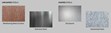
Painted steel is the most commonly specified option for roofing and cladding in Australia. Options like Bluescope’s Colorbond® and Selection Steel’s Unicote Lux® combine a metallic coating with a painted finish to provide consistent appearance, reliable performance and predictable ageing. Painted steel offers a wide colour range, good availability and well‑understood long‑term behaviour. In more demanding environments, higher‑performance base coatings are often specified to improve durability, particularly at cut edges.
Aluminium offers a different set of benefits. It is lightweight and naturally corrosion resistant, making it well suited to coastal and high‑exposure locations. Most architectural aluminium used in Australia sits within the 5000 series and is typically powder coated or anodised. While aluminium is stable and easy to work with, it is less stiff than steel, meaning panel sizes and fixing details need careful consideration.
Painted aluminium systems combine these advantages with refined finishes and are increasingly used where long‑term durability is a priority.
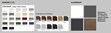
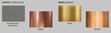
More specialised materials, such as copper and titanium zinc, are generally reserved for specific architectural applications. Their long lifespan and evolving patina suit heritage and landmark projects, but their cost and detailing requirements limit wider use. Similarly, brass and bronze tend to be used as feature elements, with painted alternatives often providing a more practical solution.
In the end, every metal has a role — but no metal belongs everywhere. Thoughtful selection, made early in the design process, helps ensure that material choices support both architectural intent and long‑term performance.
If you’d like to discuss metal options for an upcoming project, No.1 Roofing & Building Supplies is available to help navigate material choices and performance considerations.
_
If you need to know more about No 1 Roofing and Building Supplies, or if you need to discuss a project, please do not hesitate to contact any of the below.
Marcio Da Silva
GM of Architectural Specifications
m:0404 685 531
e: marcio.dasilva@no1roofing.com.au
Website: No 1 Roofing and Building Supplies