


ARCHITEAM AWARDS
CASE STUDY | HORSHAM HOUSE
Architect: Jake Taylor Architecture
Project Architect: Jake Taylor
Location: Horsham, VIC
Completion: 2024
Photography: Jack Lovel
Traditional Custodians: Jardwadjali People
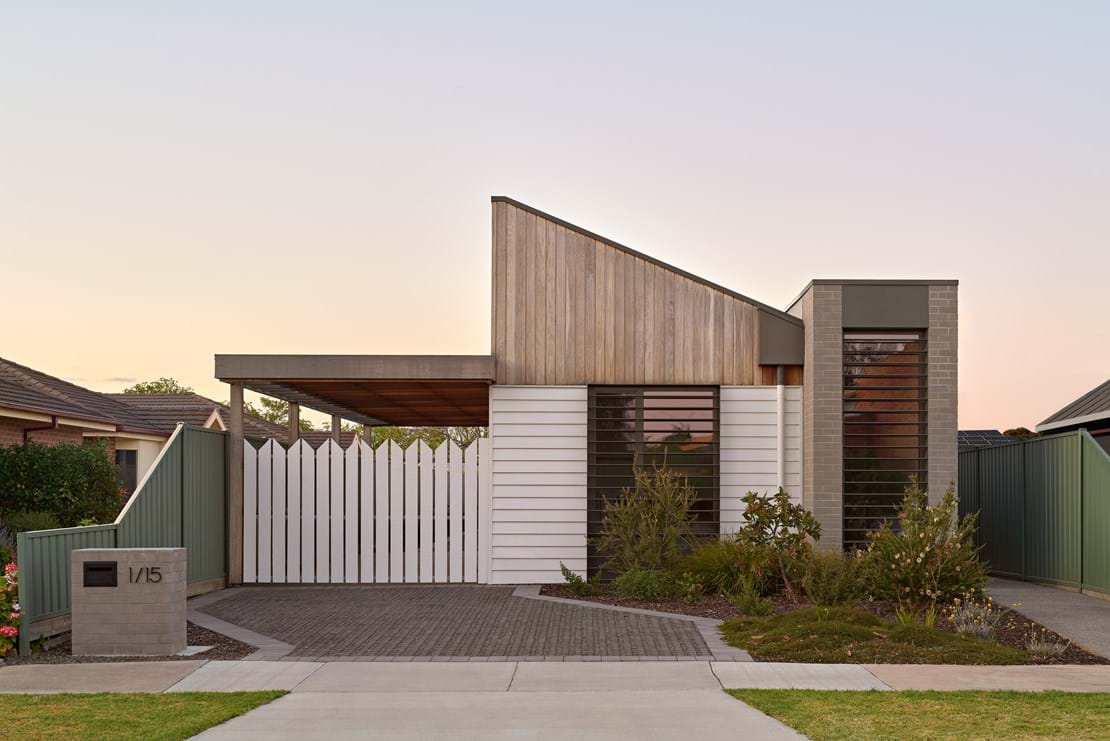
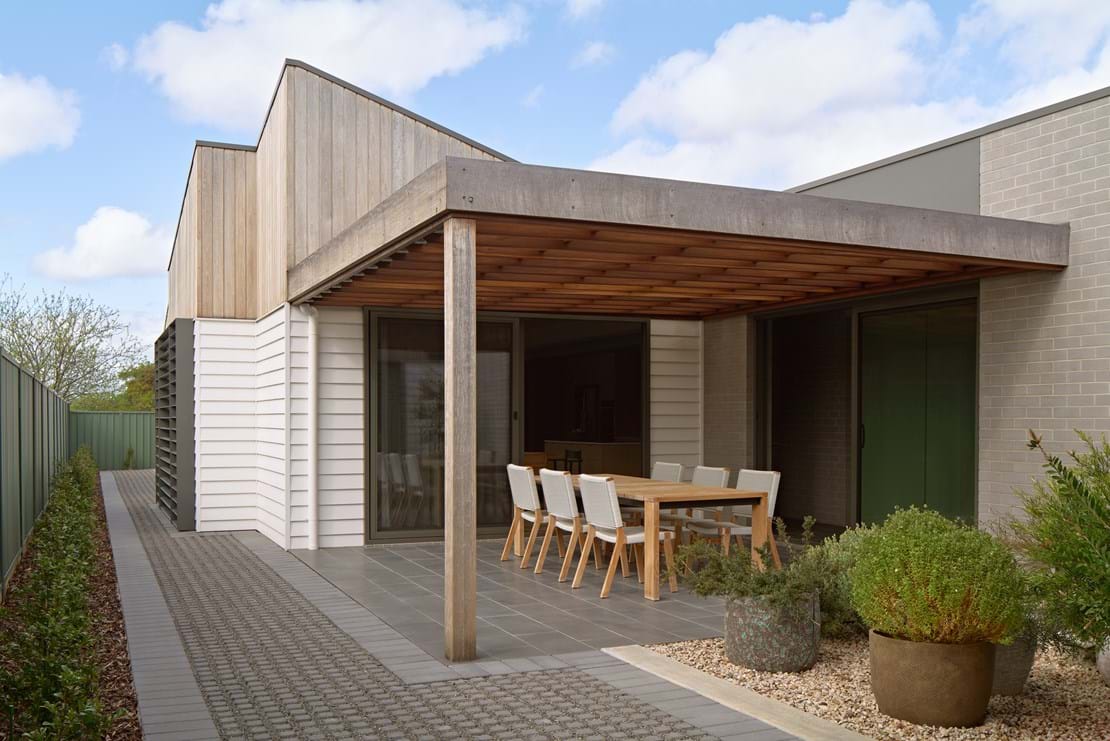
Horsham House is underpinned by an ambition to create a timeless, curated home that draws on both local architectural heritage and personal memory. While situated in the centre of Horsham within a predominantly civic setting, the design takes cues from the Wimmera’s rural farmhouses—particularly their wide verandas and sheltered outdoor spaces—reinterpreting these qualities for contemporary urban living.
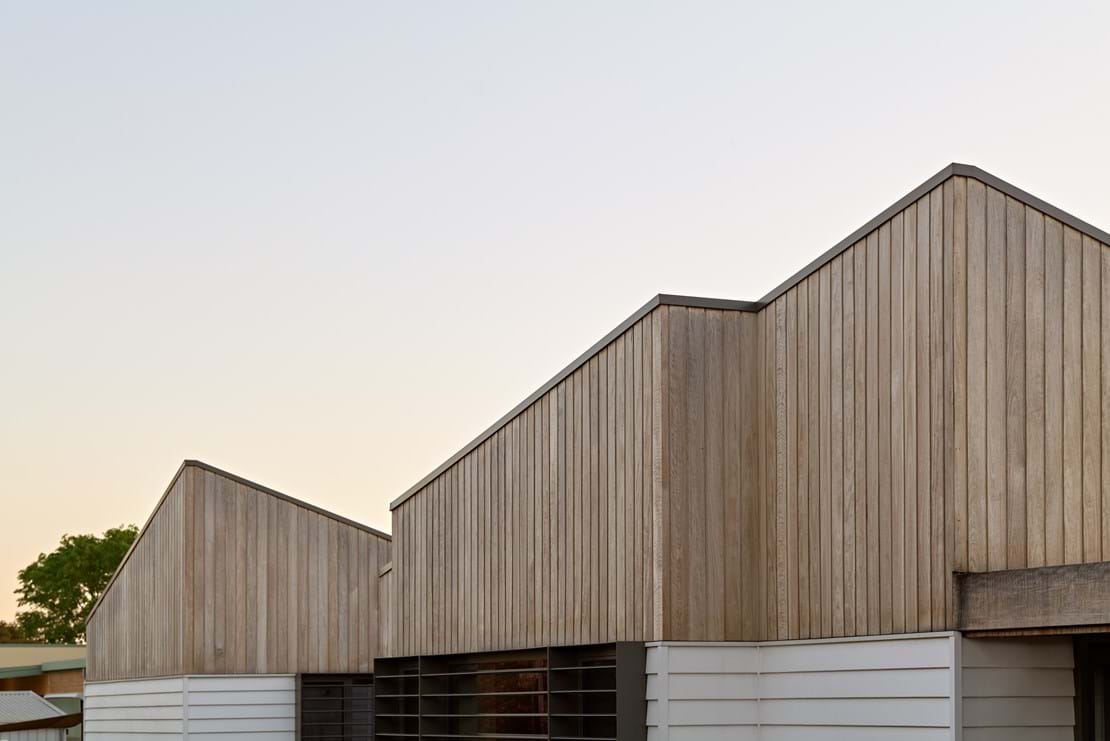
Rather than a singular built form, Horsham House is conceived as a sequence of connected pavilions, allowing light, landscape and seasonal change to become integral to daily life. The design establishes a clear priority on indoor–outdoor relationships, ensuring the home remains comfortable, private and adaptable throughout the year.
Commendation | Residential New: Up To $1M
Sponsored by James Hardie
Awards Recognition
Horsham House is a deeply personal and carefully crafted residential project, designed by Jake Taylor for his mother, Bernadette. This uniquely trusting architect–client relationship enabled a highly resolved and innovative response—one that prioritises warmth, spatial generosity and a strong connection to landscape within an urban, civic context where architect-led housing is rare.
Awarded a Commendation in the Residential New: Up to $1M category, the project demonstrates how thoughtful planning, climatic responsiveness and enduring material choices can elevate regional residential architecture.
Project Team
Architect: Jake Taylor – Sole Practitioner
Builder: Lane Contractors
Structural Engineer: Structure Studio
Site Strategy and Planning
The narrow, north-facing site—measuring 10 metres wide by 50 metres long—presented both a constraint and an opportunity. The response positions three north-east facing vaulted pavilions along the length of the site, each paired with its own courtyard space.
A defining architectural element is the continuous western spine, which:
- Runs almost the full 40-metre depth of the site.
- Shields the home from Horsham’s harsh summer sun.
- Encloses and protects the courtyard spaces, enhancing privacy.
- Acts as the primary circulation axis, with all rooms either inhabiting or branching from it.
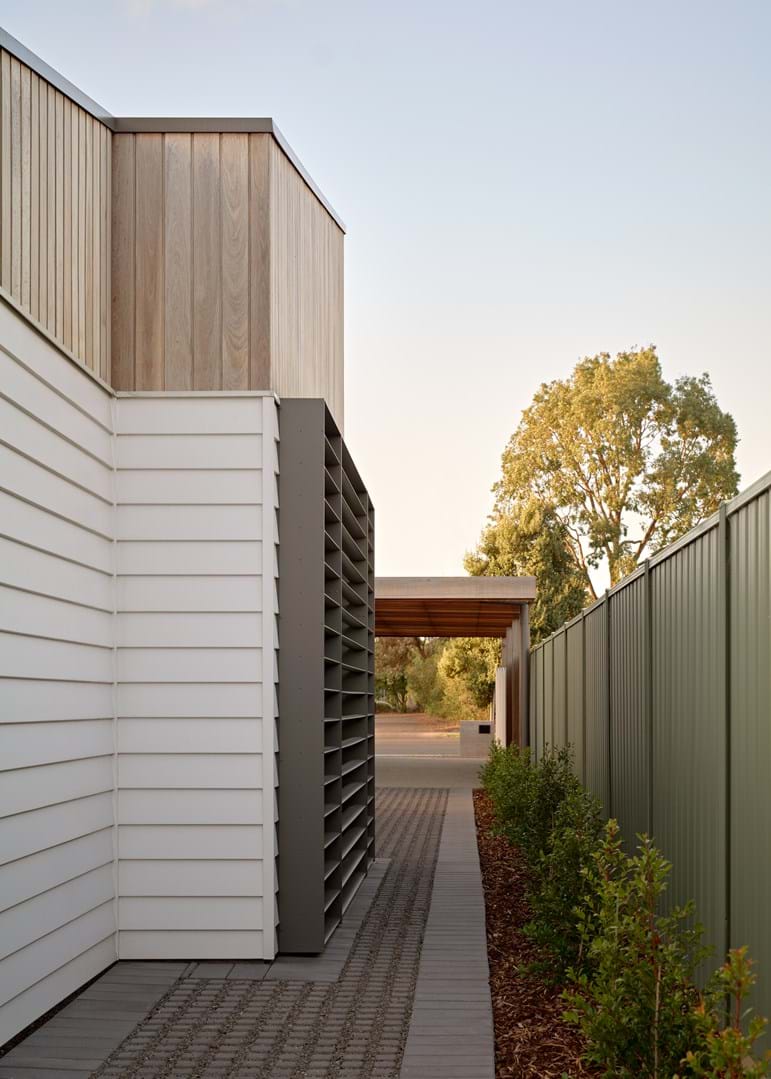
Clad internally and externally in brick, the spine provides mass, thermal stability and a sense of permanence, while the lighter pavilion forms lift towards the north-east to maximise light and outlook.
Context and Broader Contribution
Located near significant civic architecture—including the Gregory Burgess–designed Ss Michael and John’s Catholic Church—the house carefully negotiates scale and presence. Rather than mimicking surrounding non-residential forms, Horsham House establishes a distinctly residential identity while maintaining a calm, respectful streetscape presence.
As a contemporary architectural statement in a regional setting, the project consciously seeks to redefine what is possible for residential design in the Wimmera, demonstrating the value of architect-led housing beyond metropolitan centres.
Materiality and Sustainability
A restrained, enduring palette supports both longevity and environmental performance:
- Brick spine for thermal mass and durability.
- Linea™ Weatherboard to articulate the lighter pavilion forms.
- ZINCALUME® corrugated roofing, referencing rural precedents while ensuring robustness.
- Aluminium-framed windows and doors to support performance and longevity.
The project incorporates passive solar principles, strong solar orientation, shaded outdoor spaces and robust materials, delivering a comfortable home with minimal reliance on mechanical conditioning.
Spatial Organisation
Each pavilion is clearly articulated in plan and function:
- Guest Pavilion (Front):
Includes two bedrooms, a bathroom and laundry, bordered by a tandem carport and opening to its own courtyard. - Living Pavilion (Middle):
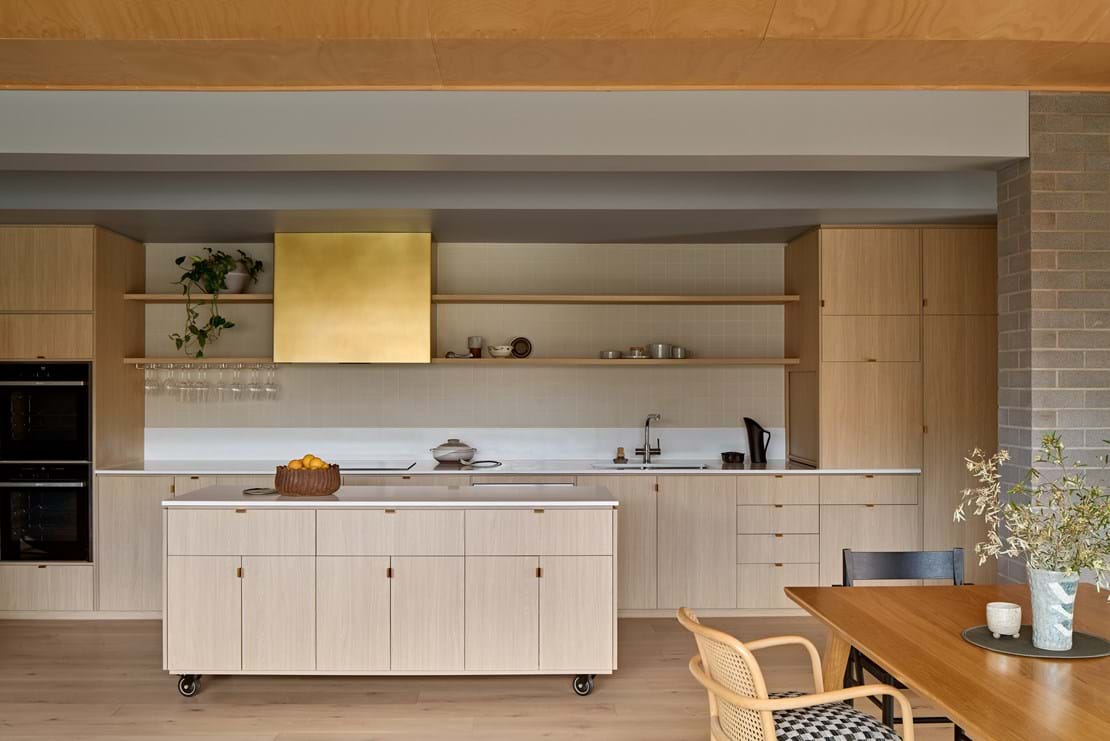
The social heart of the home, opening to the main courtyard and a covered outdoor dining space. It contains a generous galley kitchen and open-plan living and dining areas. - Bedroom Pavilion (Rear):
Positioned behind a more private courtyard, this pavilion houses the main bedroom, bathroom and powder room, offering retreat and quiet separation.
Internally, the vaulted pavilion forms are expressed through plywood-lined ceilings and walls, reinforcing spatial drama and drawing attention to the prized north-east orientation in each zone.
Conclusion
Horsham House is an assured and generous piece of regional residential architecture—one that balances personal narrative, climatic intelligence and spatial clarity. Through its pavilion arrangement, protective spine and finely tuned indoor–outdoor relationships, the project delivers a home that is both deeply liveable and quietly radical within its context, setting a benchmark for thoughtful, architect-led housing in regional Australia.