


ARCHITEAM AWARDS
CASE STUDY | YARRAVILLE PEAK



Architect: Weaver+Co Architects
Project Architect: Martyn Weaver
Location: Yarraville, VIC
Completion: 2024
Photography: Tom Ross
Traditional Custodians: The Bunurong people of the Kulin Nation
Yarraville Peak represents a highly sensitive and ambitious reworking of a double-fronted Victorian villa on a prominent corner site. Through a skilful interweaving of colour, geometry, heritage references and contemporary performance, Weaver+Co Architects have crafted a home that is both deeply grounded in its history and boldly responsive to the needs of a multi-generational family. The project delivers a cohesive, joyful and high-performing home that rebalances heritage fabric with immersive contemporary design—earning widespread recognition across multiple ArchiTeam Awards categories.
Winner | Residential Alterations & Additions Over $1M
Sponsored by James Hardie
Awards Recognition
Yarraville Peak was recognised across multiple ArchiTeam Award categories, reflecting its excellence in design, sustainability, community appreciation and budget-conscious innovation:
- Winner - Residential Alterations & Additions Over $1M
- Commendation - Heritage
This broad recognition highlights the project’s rare combination of architectural depth, environmental performance and emotional resonance with both professional peers and the public.
Project Team
Architecture & Design
- Martyn Weaver – Project Architect
- Sushma Prabhu – Graduate of Architecture
- William Tran – Student of Architecture
Consultants & Contractors
- Builder – Format Group
- Furniture Selection – Lucy Marczyk Design Studio
- Structural & Civil Engineer – Meyer Consulting
- Landscape Design – Eckersley Garden Architecture
- Draftsperson – Dean Connor
- Editorial Styling – Jess Kneebone
- Building Surveyor – Metro Building Surveying
- Lighting Consultant – Gineco Lighting
- ESD Consultant – Floyd Energy
- Quantity Surveyor – Newin
Site Strategy and Planning
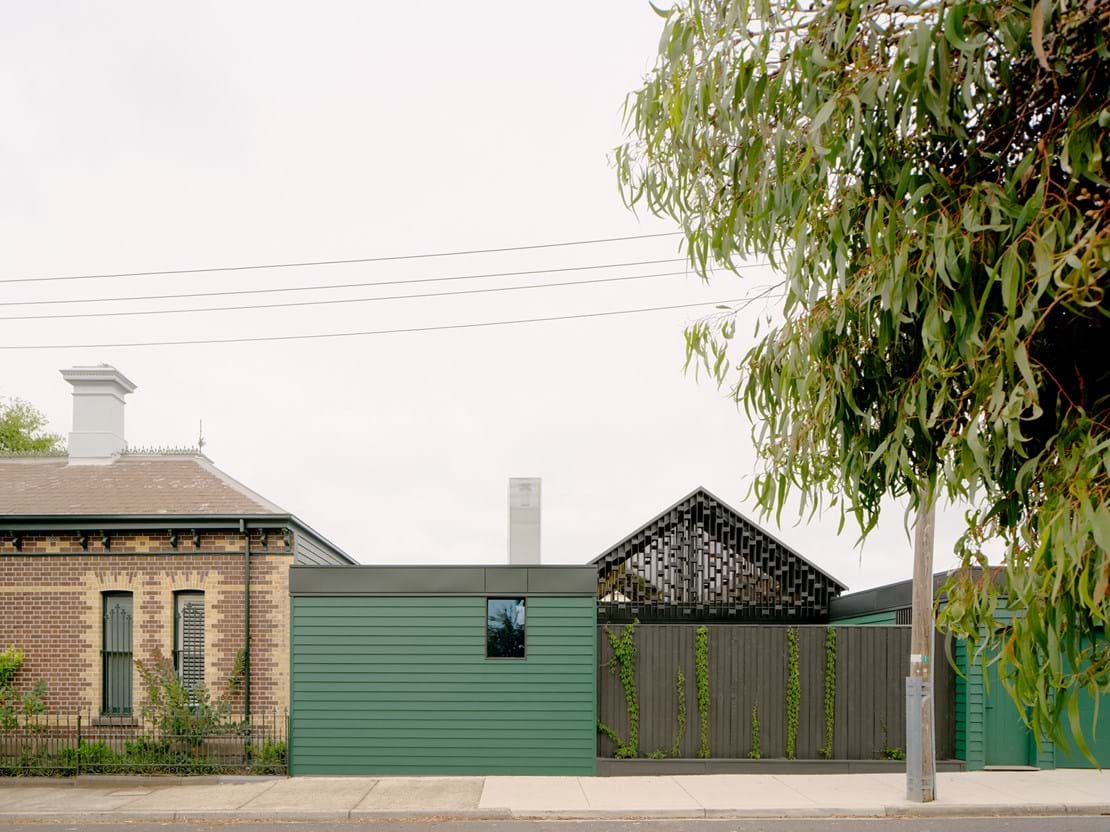
The site’s corner condition and heritage context presented both constraints and opportunities. The design carefully negotiates dual street frontages while ensuring privacy, solar performance and neighbourhood integration.
Major planning achievements include:
- Reworking an outdated 1980s addition to improve circulation, coherence and natural light.
- Retaining the traditional bedroom wing at the front of the house.
- Introducing a lower, more intimate volume housing the lounge and main bedroom, creating a clear sense of retreat.
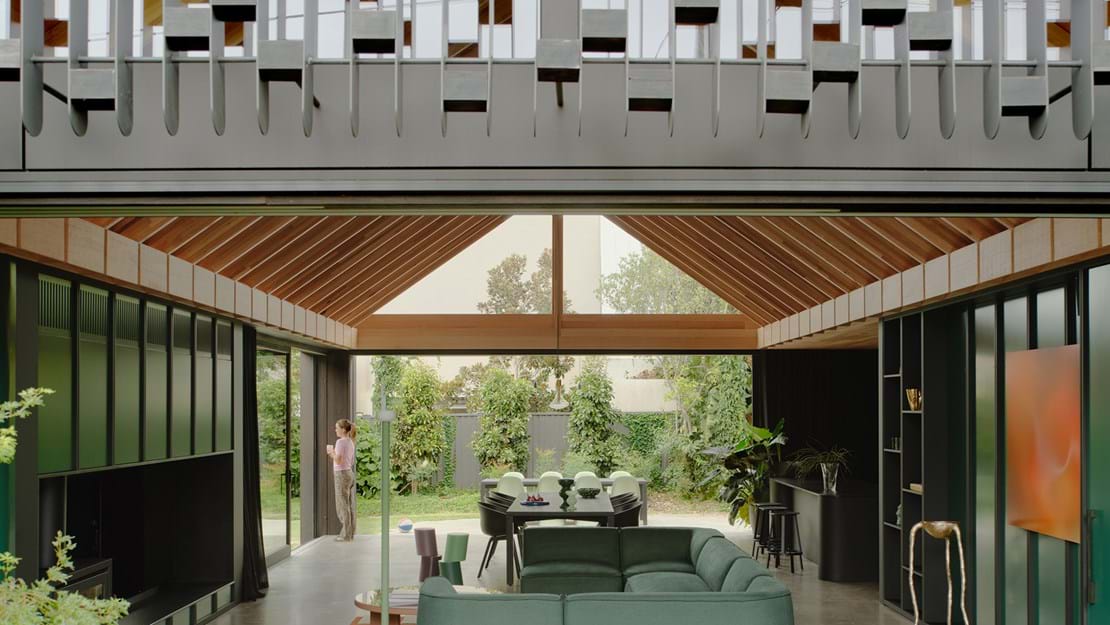
- Expanding a compressed hallway into a dramatic, light-filled living and dining space with a timber-lined ceiling.
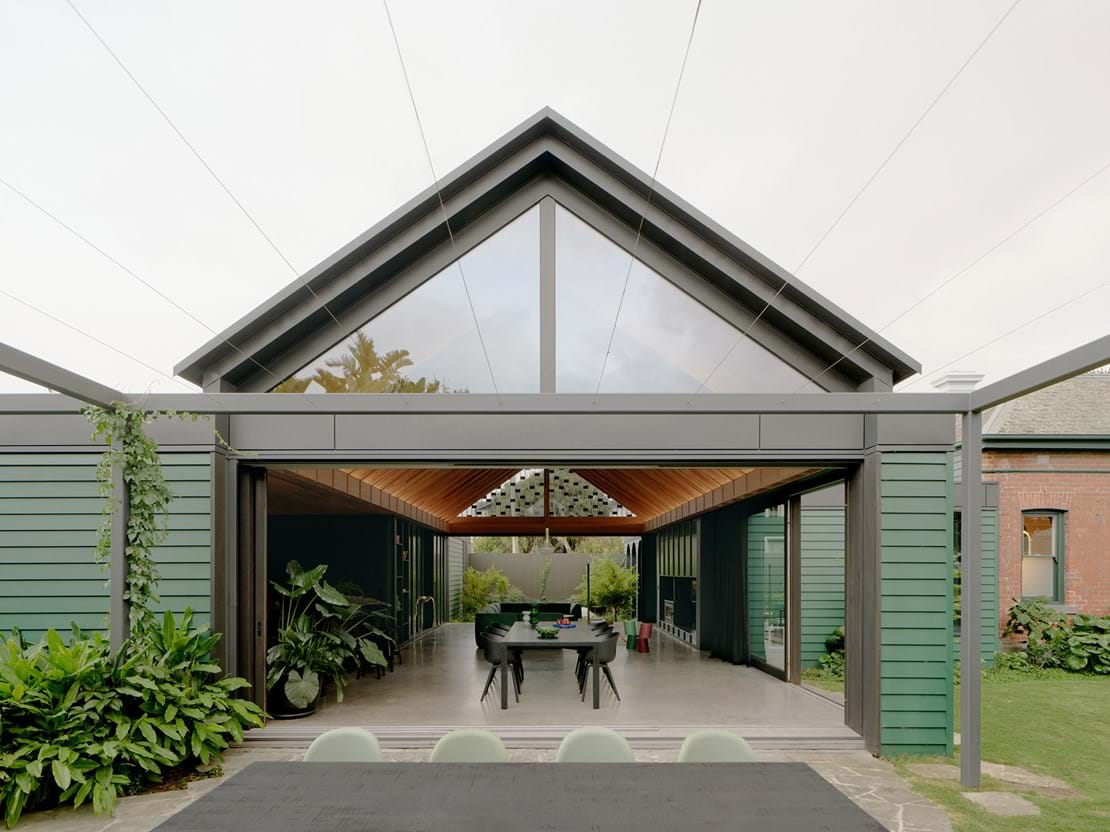
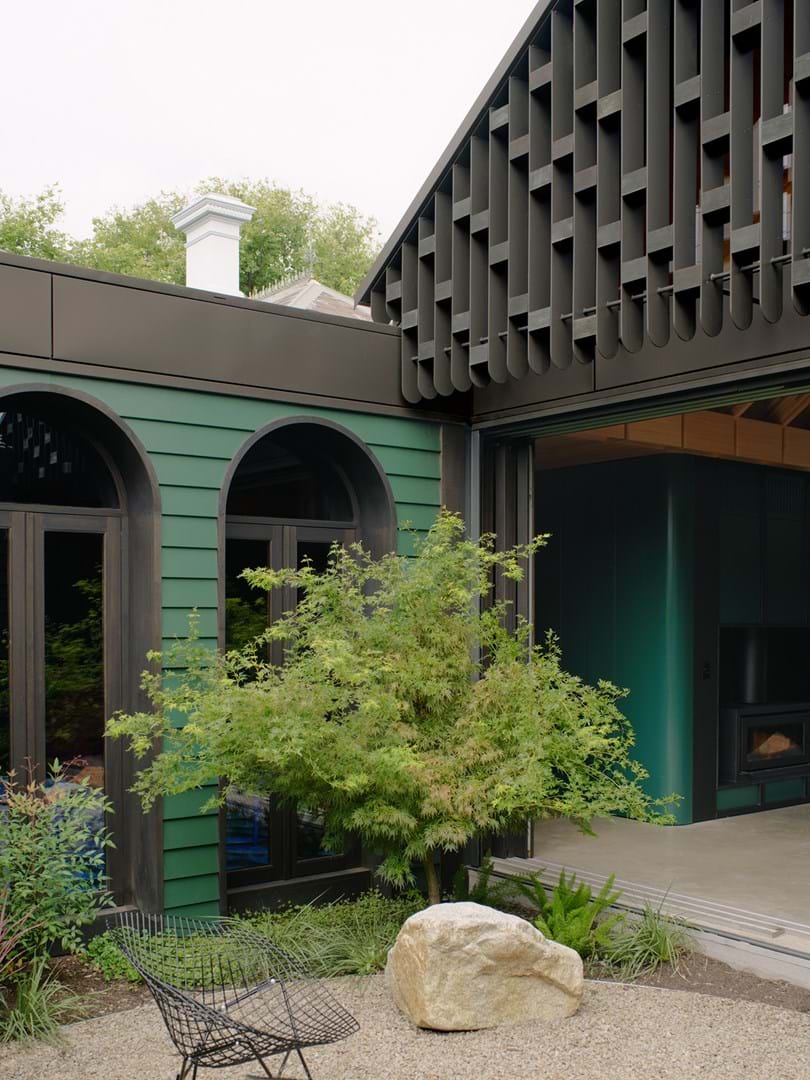
- Positioning the new addition to open seamlessly to gardens and a central courtyard via large lift-and-slide timber doors.
This choreography of compression and expansion, dark and light, old and new, creates a dynamic spatial narrative throughout the home.
Design Intent and Architectural Approach
A key ambition of the project was to create an addition that honoured the past while elevating it, resisting the simplistic “old vs. new” dichotomy typical of heritage alterations. Instead, Weaver+Co developed a shared visual and spatial language drawn from the home’s original proportions, patterns and materials.
- Reinterpreted Victorian motifs appear as repeated forms and patterns, including arches, decorative geometry, tessellated tile references and a layered use of colour.
- A charred timber and aluminium brise soleil filters northern light and subtly echoes the lacework and ornate front gate of the original façade.
- The gabled form takes cues from the former blacksmith’s workshop historically located on the site, as seen in archival photographs.
- Colour-led design was inspired by original stained glass, with highlight windows and skylights casting tinted light throughout the day, animating interiors and reinforcing historical connections.
The result is a home imbued with narrative continuity—a contemporary extension that feels intrinsically connected to the building’s origins.
Materiality and Sustainability
Yarraville Peak demonstrates a thoughtful commitment to sustainable design and long-term performance. Weaver+Co employed a restrained and efficient materials palette prioritising durability, local sourcing and thermal performance.
Key sustainability features:
- Timber-lined ceilings to improve acoustic comfort and warmth in living areas.
- Locally sourced materials, including sustainably sourced timber,
- High-performance openings with lift-and-slide timber doors supporting thermal control.
- Durable, low-maintenance external materials, including dark zinc roofing and weatherboards.
- Integration of solar technologies and energy-efficient systems.
- Recycled materials used strategically across the build.
The design maximises northern light, cross-ventilation and garden access, ensuring year-round comfort without relying heavily on mechanical systems.
Interior Strategy
Internally, the home balances dramatic gestural design with practical family living:
- A dark, recessive kitchen anchors the central living space, allowing surrounding areas to emphasise connection to landscape.
- Colour blocking is used to define moods and zones rather than relying on expensive materials.
- Arched vanity units, heritage-referencing tiles and high ceilings reinforce continuity with the original Victorian detailing.
- Timber ceilings create a warm, acoustic buffer in the main living areas, enriching everyday experience.
These interior moves contribute to an immersive, character-filled home that remains functional and durable for a family of five.
Conclusion
Yarraville Peak is a richly layered and singularly resolved example of contemporary heritage adaptation. Through its sensitive material approach, playful yet controlled palette, and rigorous spatial strategy, Weaver+Co Architects have created a home that simultaneously honours its Victorian legacy and delivers an uplifting, high-performance environment for modern family life.